It's November, which means the Neal Taylor Nature Center is gearing up to participate in the Cornell Lab of Ornithology's Project FeederWatch. Volunteers across North America count birds at feeders and submit their observations to help scientists track population trends. The Neal Taylor Nature Center has been participating in this important research program for several years, contributing valuable data while providing visitors with opportunities to observe local bird species up close.
Several volunteers have made Project FeederWatch possible at the nature center over the years, so we'd like to give them a shoutout and special thanks.
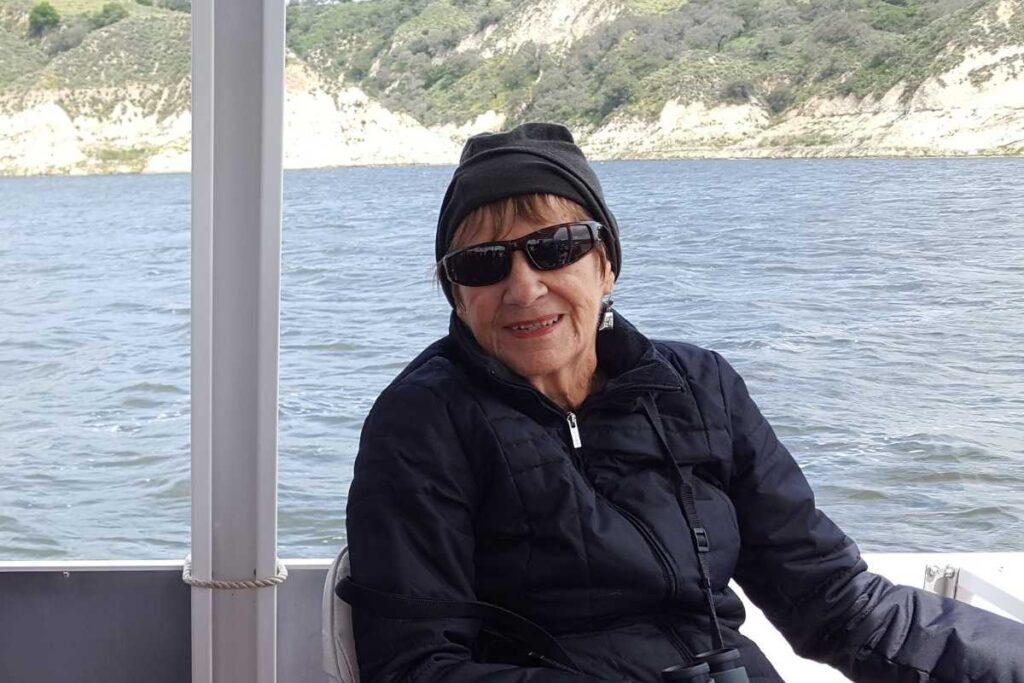
Nancy States, an avid birder, has been donating all of our bird seed for over 20 years. She is an avid birder and has traveled near and far to bird throughout her life! She is also a longtime and generous supporter of the Nature Center on so many levels. The Nature Center and our feeder birds are so fortunate for Nancy’s involvement & generosity!
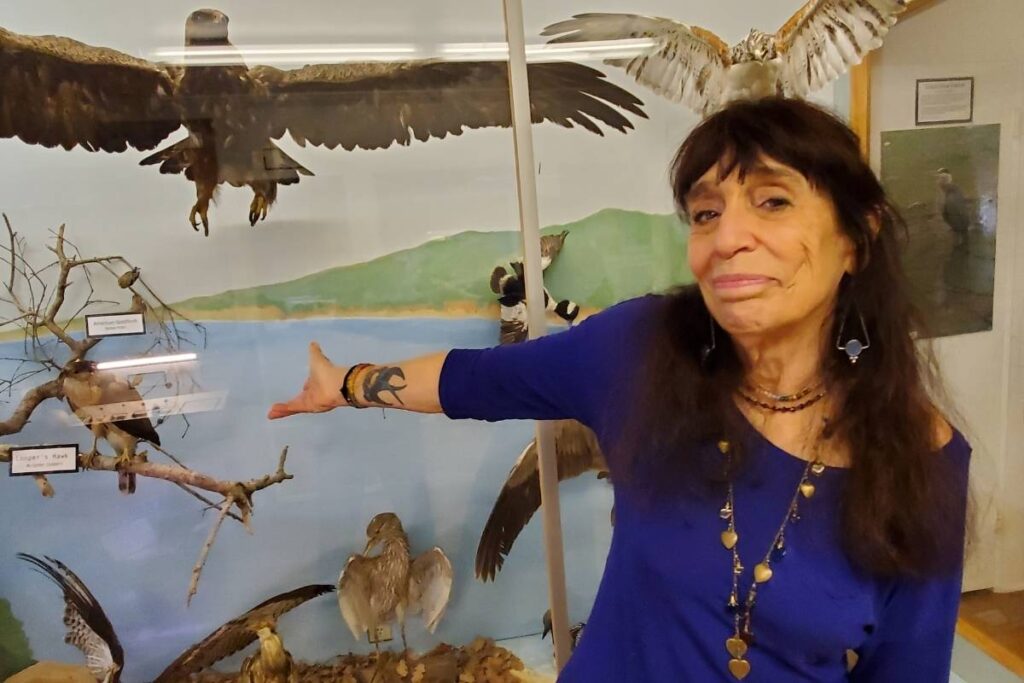
Christine (Chris) Farro has been volunteering with Project FeederWatch at the Nature Center for two years, serving as the primary observer who tracks and submits the season's bird sightings to Cornell Lab. With a keen eye for detail and infectious enthusiasm, Chris can distinguish between subtle differences in finch species, spot seasonal plumage variations, and even identify unusual behaviors.
In this interview, Chris shares her observations, discusses the art of attracting different bird species, and reflects on why getting more people excited about birdwatching matters for conservation.
Neal Taylor Nature Center (NTNC)
What birds have you seen so far this year?
Chris
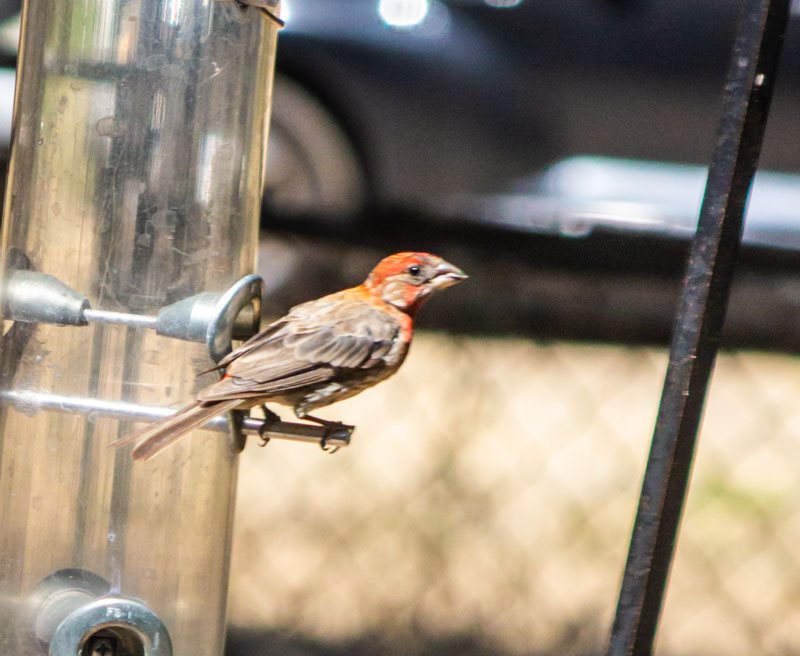
This year, we've gotten Juncos and House Finches, of course. We've got our American Goldfinches and Lesser Goldfinches today. We have a Yellow-rumped Warbler, Mourning Doves, Band-tailed Pigeons, White-breasted Nuthatch.
And at the hummingbird feeders, we got the usual Anna's Hummingbird, but we also got the Hutton's Vireo.
We always have lots of Scrub Jays. I've been seeing Pine Siskons, which look almost like sparrows, but they've got the finchey beak and a striped chest.
Chris
Yesterday I saw a Gold-crowned Sparrow, which has a gold stripe on its head instead of a white one. We also get the White-crowned Sparrows, but I haven't seen any other kinds of sparrows yet this year.
We haven't had any Thrushes yet. Thrushes are a cousin of the Robin. They don't have red breasts, but a brownish-red or olive oil color. And you'll only find them on the ground. They generally don't go to feeders.
Right now we have a lot of the year-round birds, but as it gets colder the winter birds should be coming in more and more, like Warblers and such.
NTNC
Have you noticed any changing patterns in the birds you see or don't see?
Chris
Oh, yeah. White-breasted nuthatch. I get them at my house because I put out suet blocks. I get little pieces of suet I put in a round feeder, and they come hang upside down a lot. I see them at my house a lot, but never saw one at the Nature Center until yesterday.
It's interesting what birds you don't see. I haven't seen any Kestrels or Merlins for two years in a row. They're really small falcons, once very common in this area. That doesn't mean they're not around, but I haven't seen them. I haven't seen any Quail yet this year, either, which is relatively unusual. Normally, they hang out a lot in the Nature Center's garden.
NTNC
What should someone who wants to get into birdwatching know about setting up feeders at their home?
Chris
Have a variety of feeders, and places for the birds to hide, like trees and bushes. Keep the feeders as far away from the house as possible, and keep cats away.
The important thing to know is to not just get a wild birdseed mix, because the cheaper ones have mostly darker millet. You want white millet, black oil sunflower seed, for most of the birds. I give my birds safflower also, and they seem to like that, especially in the winter. You can also get freeze-dried mealworms.
At the nature center, we have one feeder with thistle for the Goldfinches and sometimes warblers. Our biggest feeder has a white millet blend, and then our last feeder has black oil sunflower seed.
Have a bird bath or a fountain (they like movement). The birds love water features, and especially when it's warm you'll see them take baths. It's so much fun.
NTNC
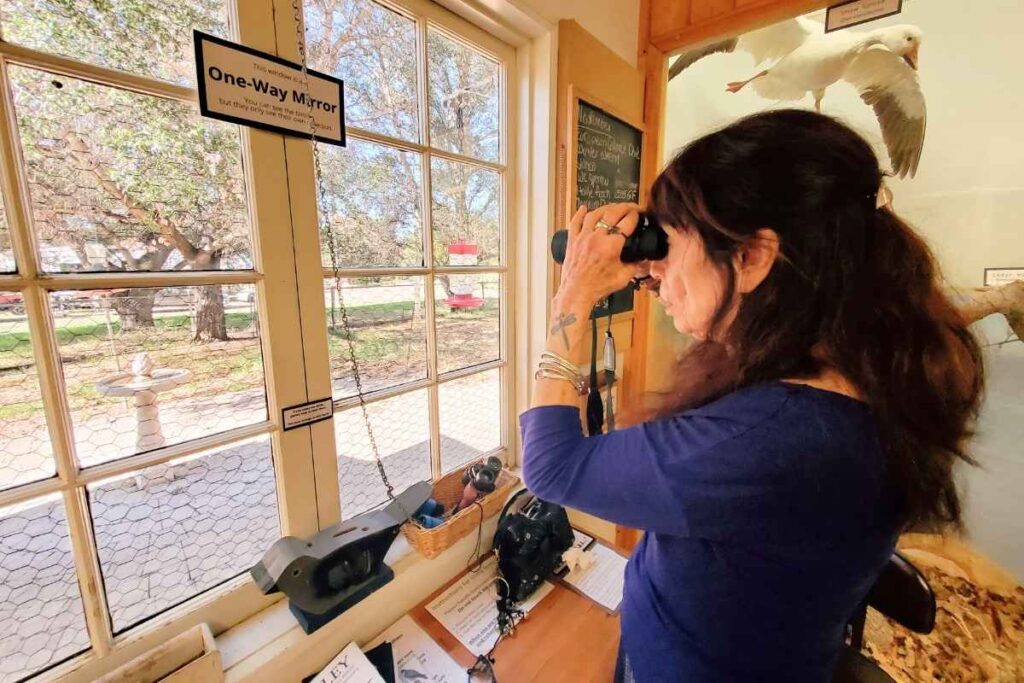
We also have two feeders with sugar water for the hummingbirds, and we get to see them up close through the one-way mirror window, which is amazing.
You can buy a one-way mirror film to put on your windows, so that you can watch them without scaring them away. It's also important to put anti-collision window stickers to stop birds from flying into your windows at home. Cleaning and sanitizing bird feeders and bird baths regularly is also important, so that the birds don't get sick.
The naturalists at Cachuma Lake recently installed their own bird cam feeder in the nature center's native garden. These wildlife cameras are a great way to get a close look at the fascinating behavior of birds, especially when you might not always be around to watch them. They post bird videos on the official Cachuma Lake Instagram page.
NTNC
What are some of the most fascinating things you've seen while birdwatching?
Chris
There's so much more to birdwatching than just identifying the species. Their behavior and migration patterns are fascinating, too!
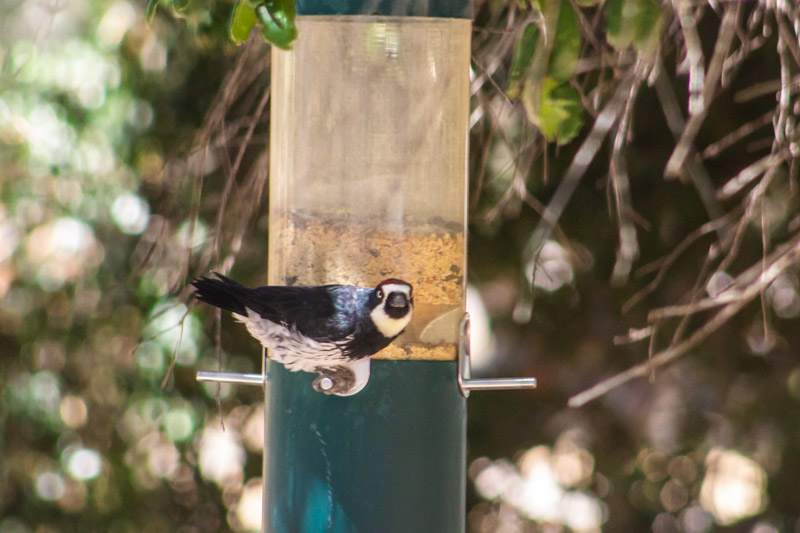
Yesterday, one of the acorn woodpeckers was drinking sugar water out of the hummingbird feeder. Unbelievable! That was very cool. I've never seen that before.
At home, I saw a wild weasel hunting birds at my feeders.
I used to see a lot of Loggerhead Shrike, not here at the nature center, but at other places. They're called butcher birds because they get rodents or small birds, and they hang their prey on barbed wire and use it to hold their prey still so they can tear it apart and eat it.
Chris
The birds can fight; they goof around all the time. I see Red-winged Blackbirds and California Scrub Jays chase away other birds from the feeders. They're so aggressive. The most dramatic is during breeding season in early spring, like March and April. Their colors get so bright and vivid that time of year!
The variations in their plumages are gorgeous, too. Red-tailed Hawks have so many different morphs (feather patterns). Juncos can have a reddish-brown tint, but the other day I saw one that looked more yellowish. There are so many differences in shading, in their belts, and in colors. It's nuts.
NTNC
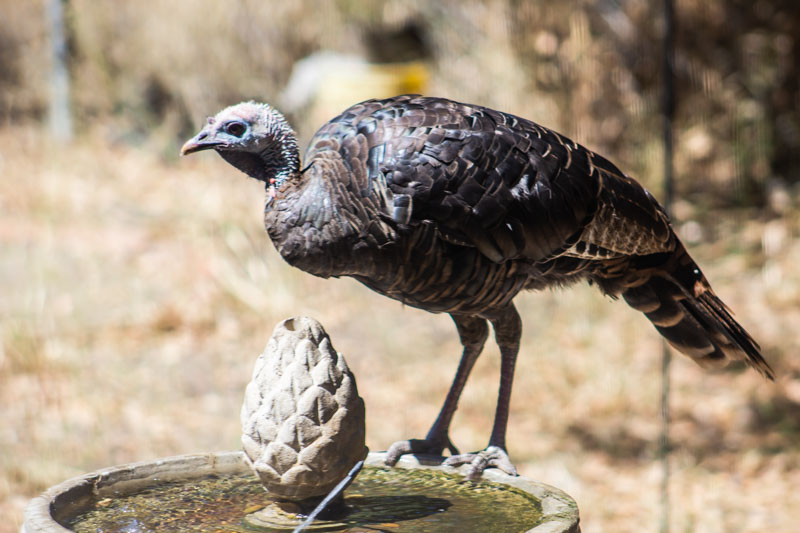
Interesting, we didn't know that the Acorn Woodpeckers liked sweets! We've seen a lot of really cool things out of this birdwatching window, too. Wild turkeys, baby California Quails, Red-tailed Hawks, and more.
A few months ago, our docent Colin got pictures of a Turkey Vulture trying to get at a squirrel that a Red-Tailed Hawk was eating! Eventually the Red-Tailed hawk flew away with its prey while the Turkey Vulture ate the scraps it left on the ground. We've also seen the Red-tailed Hawks squabble with crows over prey here in the park.
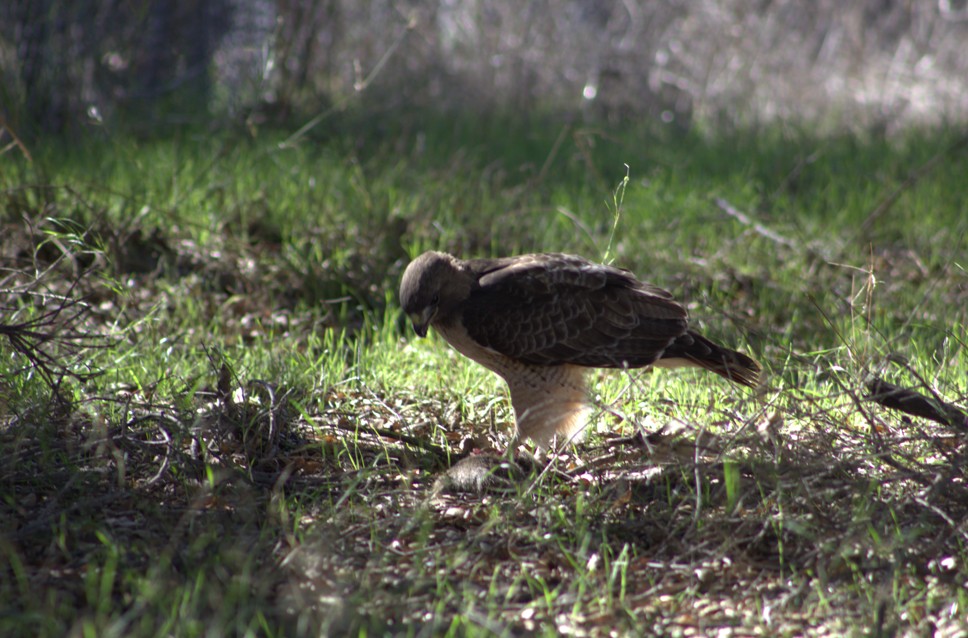
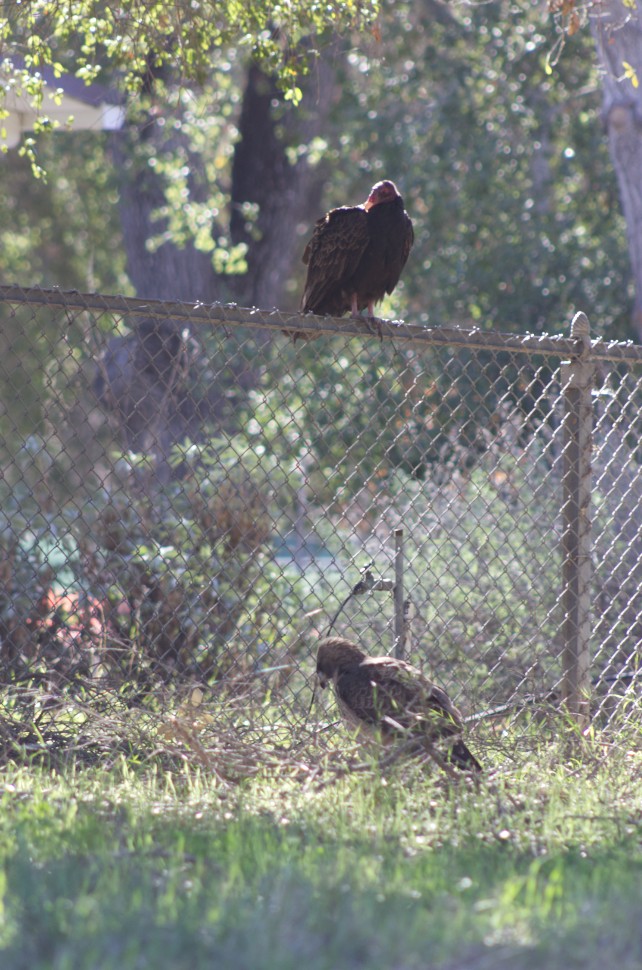
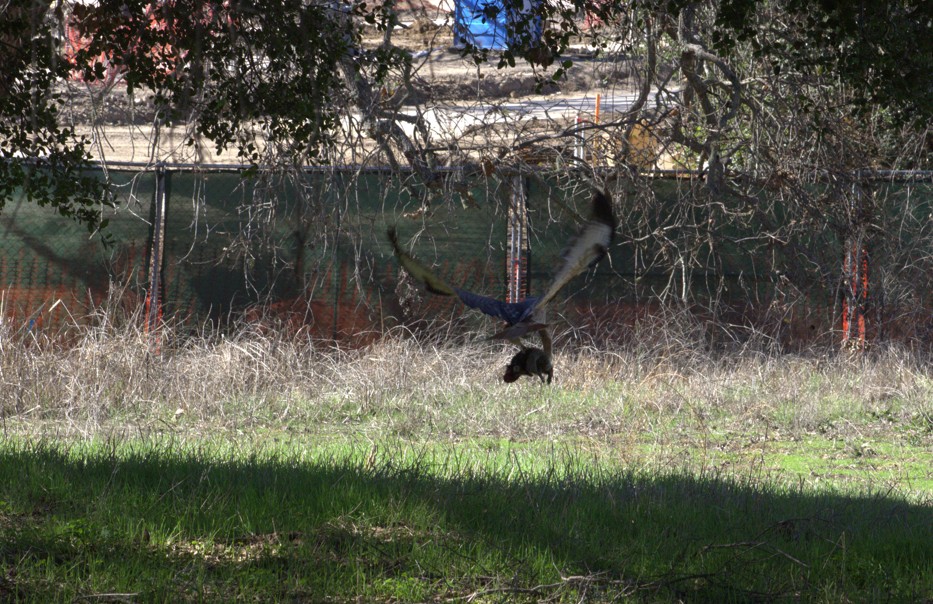
This Red-tailed Hawk (Buteo jamaicensis) and Turkey Vulture (Cathartes aura) were spotted behind the Neal Taylor Nature Center.
Photos by Colin Eldridge
NTNC
Anything else you'd like to tell our audience?
Chris
Just that birdwatching is so much fun.
Whenever someone comes to the nature center while I'm birdwatching, I practice getting them excited. If more people can get excited about birdwatching, then maybe we can save our birds.
Chris will be birdwatching at the nature center on most Thursdays and Fridays from 10am - 12pm from November 2025 through mid-April 2026, and she would LOVE to show you our native birds and answer any questions!
Come visit the live bird exhibit at the Neal Taylor Nature Center from Thursday - Saturday 10am - 4pm and Sunday 10am - 2pm. Happy birding!
Want to volunteer with Project Feederwatch at home? Visit their website here:
https://feederwatch.org/join-or-renew/