Ants, those tiny yet remarkable creatures, play an immensely significant role in many ecosystems around the world, contributing to biodiversity and functioning in ways often unnoticed by human eyes. As we delve into the intricate world of ants, we uncover a tapestry of diversity, cooperation, and adaptation that showcases nature’s ingenuity.
California hosts an array of ant species uniquely adapted to its diverse habitats. From the riparian zones (along the riverbanks) to chaparral hillsides (dominated by shrubs like California sage), ants have carved out their unique ecological niches, or habitats and roles in the ecosystem. Through forming vast colonies and various behaviors that interact with other species, ants often become the dominant insect in many ecosystems.
More Than Just Pests: The Vital Roles of Ants
While humans often view ants as pests—raiding kitchens, invading picnics, or harming garden plants—they actually play vital roles in ecosystems. In many habitats, ants act as keystone species, exerting a huge influence by regulating other species’ populations through predation, creating shared habitats, and supporting the survival of countless other organisms in other ways. When keystone species disappear, entire ecosystems can unravel.
By tunneling, ants aerate soil, improve water flow, and promote root growth. Their activity redistributes nutrients and aids decomposition, boosting soil fertility and health. Other ants spread seeds, pollinate and/or defend plants from herbivorous insects.
These interactions strengthen ecosystems and can benefit humans, too. With careful management, certain ant species are harnessed to naturally enhance agriculture.
At the same time, introducing an invasive ant to a new ecosystem can wreak havoc by devastating native species.
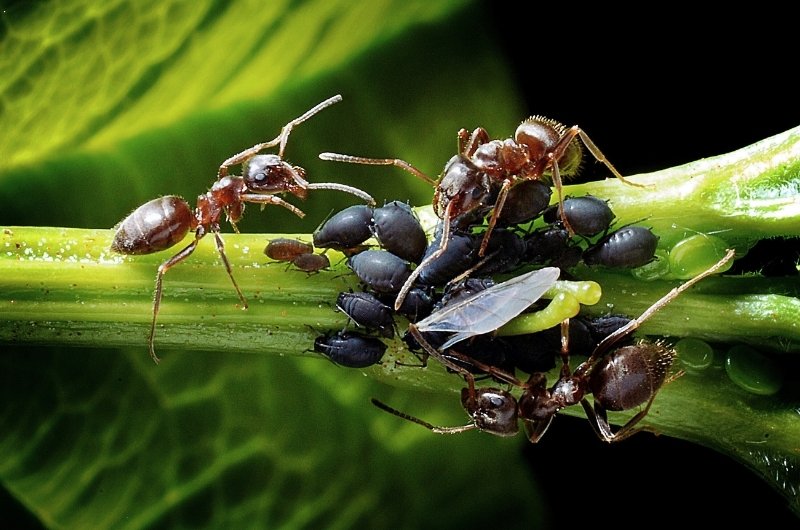
Some ants “farm” other insects, like how humans raise livestock, by protecting them from predators and moving them to fresh plants. These ants form a symbiotic relationship with aphids in exchange for the sweet honeydew aphids produce—a relationship that can harm plants and gardens by encouraging larger aphid infestations.
In certain systems, however, ant–aphid interactions can actually aid plant health. For example, wood ants guarding aphids on sycamore trees actively hunted more harmful insects like leafhoppers, resulting in less leaf damage and greater tree growth.
Ants of the Santa Ynez River Watershed
This article will focus on ants that have been identified in the Santa Ynez River watershed, where the Neal Taylor Nature Center is located. We asked Philip S. Ward, an expert on ants in California, to tell as more about the ants in our region. He said, “Unfortunately, our knowledge on ant distribution in California is not as advanced as that of vertebrates and vascular plants”. However, he pointed us to the antweb.org database.
A custom search in the database showed us over 21,000 observations of ants across California! We gathered information on local ant species from antweb.org and from research-grade observations in the iNaturalist app, looking specifically for species that have been recorded in the Santa Ynez Valley and San Rafael Mountains.
Invasive Argentine Ants
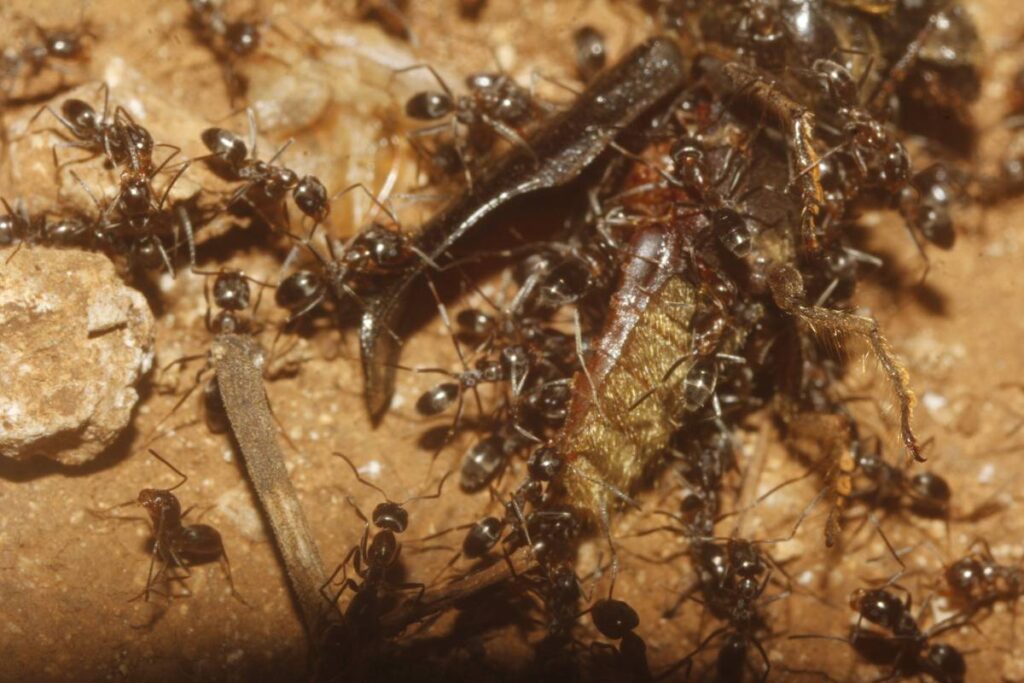
One pervasive inhabitant of this region is the Argentine Ant (Linepithema humile). Introduced to California from South America, Argentine ants have become highly invasive in every other continent except Antartica, often outcompeting native ant species and overwhelming plants and other types of insects as well. These ants engage in all-out war with other species, overrunning and replacing 90% of native ant species in California.
Despite their small size, Argentine ants form colossal supercolonies that can span thousands of miles and reshape entire ecosystems. Using genetic, behavioral, and chemical tests, scientific studies have revealed that the supercolonies found on different continents are all part of one interconnected global supercolony. Most ants fight separate colonies within their own species, but the Argentine Ant has formed the largest cooperative society of any species on Earth.
Despite their negative effects on ecosystems, there may be some positive influences from their presence, as there is much we still don’t understand about their ecological impacts. For example, L. humile has been shown to have a helpful partnership with the San Diego barrel cactus (Ferocactus viridescens), where it protects the cactus from being eaten by herbivores in exchange for nectar.
Resilient Carpenter Ants
Amidst the dominance of invasive species, some native ants can continue to survive, showcasing their resilience and adaptability. One species that has been largely replaced by the Argentine ant, but is still known to struggle and compete with them, is the Camponotus dumetorum, a type of carpenter ant native to California. Many people have heard of the commonly found carpenter ants, as they regularly invade homes and crowd around sources of food that are left out.
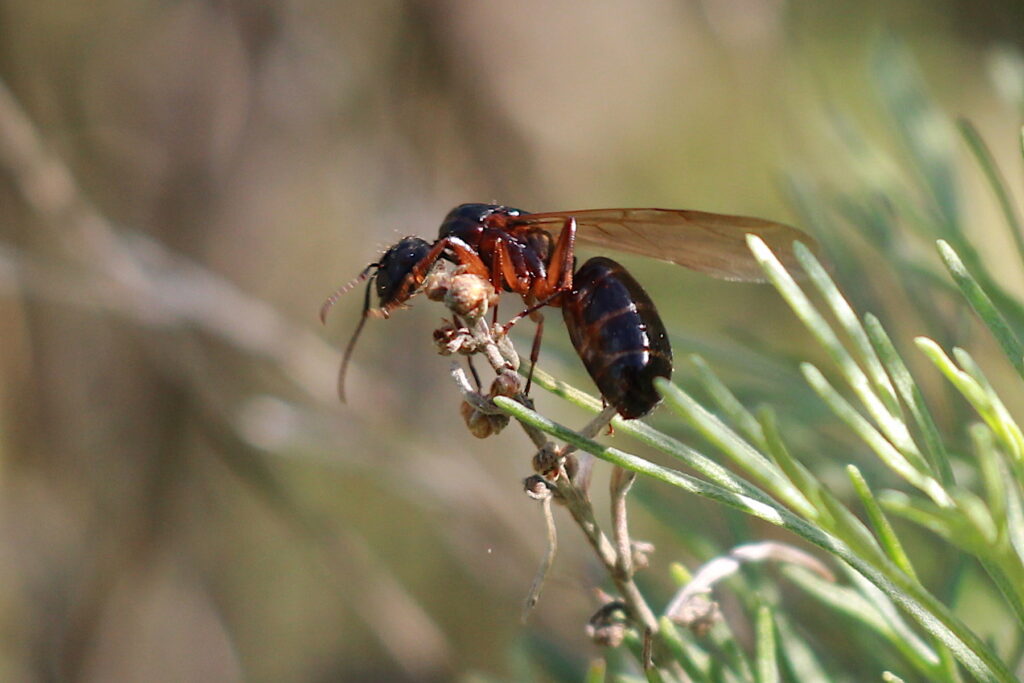
There are multiple species of carpenter ants found in the Santa Ynez river watershed, but C. dumetorum sticks out for their potential to be a dominant insect among chaparral ecosystems. This ant builds its nests in the ground amid the bushes, creating flat craters that range in size from a few inches to a foot across, with an entrance that is usually round or elongated. The workers of this species potentially harvest sustenance from aphids and coccids on the scrub oaks (Quercus dumosa) and other bushes that compose the chaparral.
Researchers have looked into using C. dumetorum to keep imported fire ants away by outcompeting them. Their potential is backed by the advantages they provide to the environment and farming, as well as their larger size, which may help them win against the fire ants.
Hallucinogenic California Harvester Ants
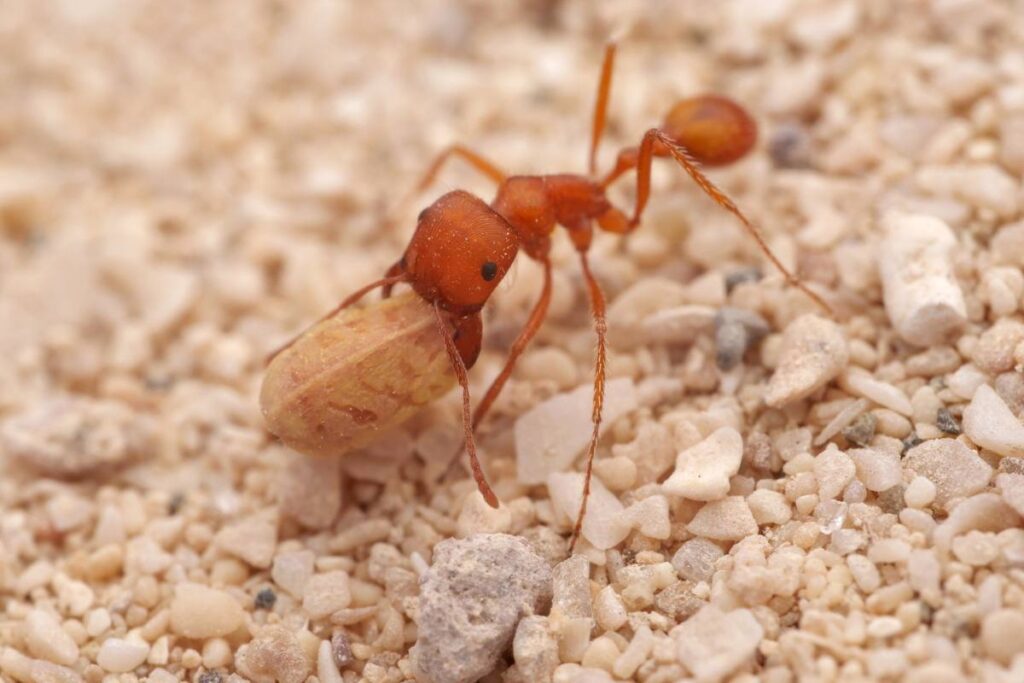
Another fascinating species that has been seen in this region is the California Harvester Ant (Pogonomyrmex californicus). Recognizable by their large, red heads and industrious nature, harvester ants play a vital role in seed dispersal and soil turnover. They collect seeds as a primary food source, storing them in underground chambers. In doing so, they inadvertently aid in the germination of plants and help maintain the delicate balance of plant communities.
The California Harvester Ant is known for its incredibly painful sting that contains various chemicals, some of which are hallucinogenic. The Chumash people would induce their stings for ceremonial and medicinal purposes. They allowed the ants to bite their mouths and throats, which would induce sacred dreams. The ants were also consumed as a rite of passage for boys entering manhood.
Other Species
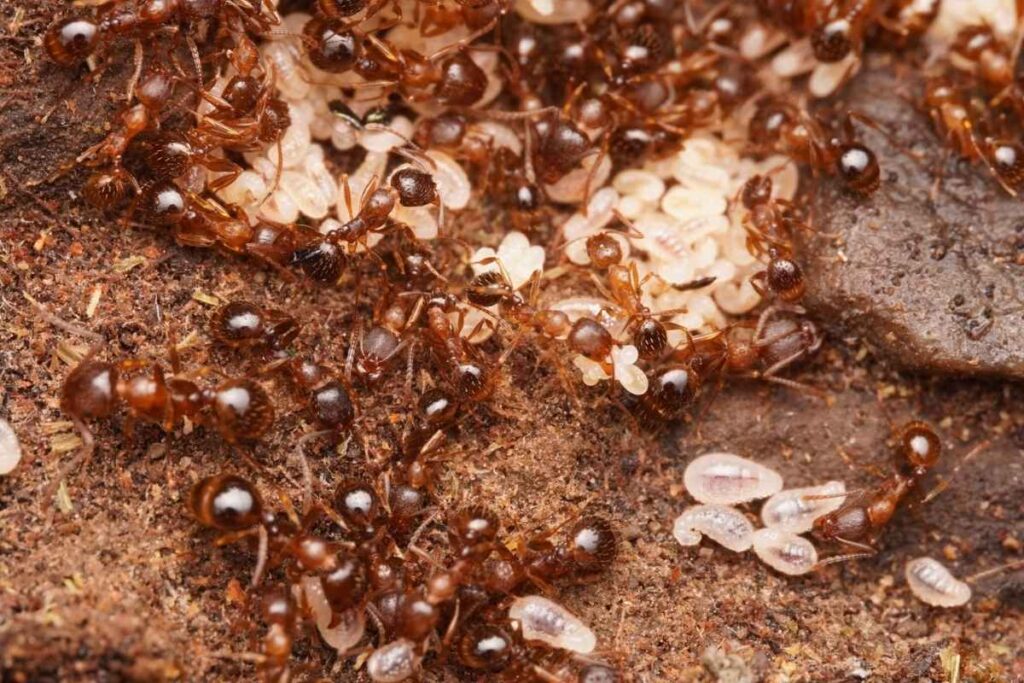
It’s hard to say just how many species of ants inhabit the Santa Ynez River Watershed region, but a few other observations include:
- Hairless rover ant (Brachymyrmex depilis)
- Western collared ant (Aphaenogaster occidentalis) – observed on Figueroa mountain
- Other carpenter ants (Camponotus anthrax, Camponotus clarithorax, Camponotus hyatti)
Ant Life Stages and Societies
The diversity of ants extends beyond their ecological roles; it also encompasses their remarkable social structures and behaviors. Ant colonies are sophisticated societies with intricate communication systems and division of labor. From foraging workers to reproductive queens and males, each member of the colony contributes to its survival and success.
Each ant colony typically has a queen or multiple queen ants, who are the only ants capable of laying eggs in the colony. They can produce thousands or millions of eggs during their lifetime,. Female alates, or reproductive ants, are potential future queen ants that lay eggs to start new colonies. New queens emerge when female alates (winged swarmer ants) mate with male alates during a nuptial flight at a specific time of year. After mating, the female alates shed their wings and drop to the ground, then search for a suitable location to start their new colony.
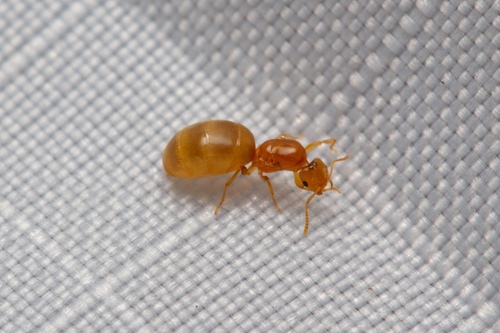
Ants communicate through a variety of means, including chemical signals known as pheromones and tactile cues. These communication methods allow them to coordinate activities such as foraging, nest construction, and defense effectively. Observing these behaviors offers a glimpse into the complexity of ant societies and their remarkable ability to adapt to their surroundings.
Moreover, ants display remarkable cooperative behaviors, often working together for the greater good of the colony. Tasks such as caring for the young, tending to the queen, and defending the nest require coordinated effort among colony members. Through cooperation and division of labor, ant colonies demonstrate the power of collective action in nature.
Scientists continue to learn more about the fascinating world of ants, with a growing list of over 15,000 different ant species identified worldwide. There are entire cities of ants underneath our feet, almost everywhere we go. One study estimates that there are 2.5 million times as many ants as humans on this planet, adding up to 20 quadrillion — or 20,000,000,000,000,000 ants. With these staggering numbers and their influence on plant and animal life in their ecosystems, one might even say that, in a way, ants rule the world.
Sources
- AntWeb – Advanced Search for California Ant Species
- Camponotus dumetorum – AntWiki
- Holway, D.A., et al. “The Causes and Consequences of Ant Invasions.” Annual Review of Ecology and Systematics, vol. 33, 2002, pp. 181–233. NCBI
- Human, Kimberly G., and David M. Gordon. “Effects of Argentine Ants on Invertebrate Biodiversity in Northern California.” Conservation Biology, vol. 10, no. 5, 1996, pp. 1242–1248. JSTOR
- Styrsky, J. D., & Eubanks, M. D. (2007). “Ecological consequences of interactions between ants and honeydew-producing insects.” Proceedings of the Royal Society B: Biological Sciences, 274(1607), 151–164. NCBI
- Styrsky, John D., and Micky D. Eubanks. “Artificial Faunal Replacement for Imported Fire Ant Control.” Ecological Applications, vol. 17, no. 4, 2007, pp. 1295–1307. JSTOR
- Tsutsui, Neil D., et al. “Genetic and Behavioral Analyses of Argentine Ant Supercolonies.” Proceedings of the National Academy of Sciences, vol. 97, no. 11, 2000, pp. 5948–5953. NCBI
- Wheeler, William Morton. The North American Ants of the Genus Camponotus. Harvard University, 1910. PDF