Disclaimer: This information is for educational purposes only. Foraging and eating wild plants carries risks. The Neal Taylor Nature Center is not liable for any illness, injury, or adverse effects from foraging or consuming wild plants.
Manzanita means “little apple” in Spanish, and it is a wild shrub that grows abundantly in California. Manzanita berries make a unique jelly with an apple-like flavor and beautiful amber color. These small, tart berries have been used by indigenous peoples as a food source, and have a long history of other uses in cider, baking, herbal medicine and more.
Making jelly from foraged manzanita berries connects you directly with the natural landscape while producing a preserve that’s perfect for toast, biscuits, or cheese boards. This wild berry jelly recipe will guide you through the complete process, from harvest to sealed jar.

| Manzanita Jelly Recipe |
| Equipment: – Large pot – Second large pot or canner (for water bath processing) – Canning rack or trivet – Canning tongs – Colander – Cheesecloth – Large bowl – Wooden spoon or stirring utensil – Ladle – Measuring cups – Measuring spoons – Spoon (for skimming foam) |
| Ingredients: – 4 cups of manzanita berries – 3 cups of water – 2 cups of sugar – 1/2 packet of pectin powder – 1 tablespoon of lemon juice – 1 cinnamon stick (optional) |
| Instructions 1. Rinse the berries in cold water. Then, add 4 cups of the manzanita berries with 3 cups of water in a pot and boil over medium-high heat. 2. Reduce heat to low and simmer for 30 minutes. Stir occasionally. 3. Let the mixture cool. Pour into a colander lined with cheesecloth over a bowl. Let the juice strain through, and then let it sit for an hour. 4. Measure the berry juice, it should be around 2 cups. If not, add water until it is 2 cups. 5. Pour the juice into a new pot and stir in 2 cups of sugar, 1 tbsp of lemon juice, pectin and optional cinnamon stick. 6. Bring to boil over high heat while continuously stirring. Let boil for 1 minute, then remove from heat. 7. Skim foam off the top with a spoon. 8. Immmediately ladle the hot jelly into sterilized jars, with a 1/4 inch of space at the top, then seal with sterilized lids. 9. Submerge the jars in boiling water for 10 minutes to create a proper seal. Take the jars out of the hot water and allow them to cool down. Inspect the seals and then store in a cool, dry and dark place for up to one year. |
Refer to this foodinjars.com this article to learn more about proper sterilization and tips for canning.

Where to Find Manzanita in Santa Barbara and the Santa Ynez Valley
California is home to over 60 species of Manzanita, with at least 12 species confirmed to grow in Los Padres National Forest. While none of them are known to be toxic, some are known to be quite unpleasant to eat while others are delicious. That’s why it’s important to know how to identify the specific species!
Big Berry Manzanita (Arctostaphylos glauca) is one common species that thrives throughout the Santa Barbara region and Santa Ynez Valley. These shrubs flourish in the chaparral and pinyon-juniper habitats, often on southern facing rocky slopes. You’ll find manzanita along hiking trails in the Santa Ynez Mountains, throughout Los Padres National Forest, and in the rolling hills of the Santa Ynez Valley.
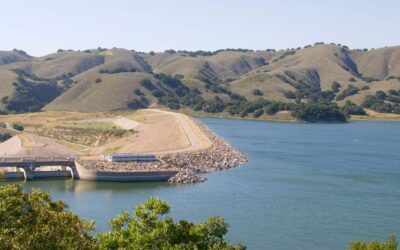
Local spots where manzanita grows include the trails around Figueroa Mountain, some areas surrounding Cachuma Lake, and throughout the foothills surrounding Santa Barbara and Goleta. The shrubs are particularly prominent in areas that have experienced wildfires in recent years. Manzanita are among the first plants to return after wildfires because they can survive fire and regenerate through resprouting or from seeds that germinate in response to fire.

How to Forage Manzanita Berries Responsibly
First and foremost, make sure it is legal and ethical to harvest the berries where you are. This involves understanding which species are protected, and which are abundant and OK to harvest, as well as obtaining permits and following the laws for public land use. You will want to contact the agency responsible for managing the land that you wish to forage on.
Best Time to Harvest: It depends on the Manzanita species and location. For example, according to the Forest Service and USDA, bigberry manzanita fruit were observed to be ripe roughly from late February to mid‑May in chaparral, and from late February into May in pinyon‑juniper woodlands. In practice, the best approach is to start watching your local plants to catch when the berries are red and soften wherever you plan on foraging. Don’t harvest when they’re green; they will be bitter.
Safety: Always properly identify the plant before harvesting. While manzanita berries are safe to eat when cooked, make sure you’re not confusing them with other shrubs. Bring plenty of water on your foraging expedition, as manzanita grows in hot, dry environments.
Identification: Pick up a field guide to help with identification, and if you aren’t a seasoned forager, you may want to bring an expert with you.
Field Guides: We recommend A Field Guide to Common Plants of the Santa Barbara Foothills and Southern California by Hugh Margerum and David Powdrell for beginners, which we sell in the Neal Taylor Nature Center Gift Shop. To dive deeper, check out Foraging Southern California: 118 Nutritious, Tasty, and Abundant Foods by Douglas Kent. A more detailed and technical field guide such as The Jepson Manual: Higher Plants of California by James C. Hickman is good if you want to be more methodical with your identifications.
Sustainable Harvesting:
- Take only 10-20% of berries from any single plant, leaving plenty for wildlife and plant reproduction
- Avoid harvesting from rare or isolated plants
- Use your fingers or scissors to gently pick berries rather than breaking branches
- Bring reusable containers for collecting
- Stay on established trails to minimize habitat disturbance
- Make sure you’re foraging on public land where it’s permitted, or have explicit permission from private landowners
This recipe was inspired and adapted from the following Manzanita Jelly recipes:
- “Manzanita Jelly.” SnapCalorie Recipes. https://www.snapcalorie.com/recipes/manzanita_jelly.html.
- “Manzanita Jelly.” Food.com. https://www.food.com/recipe/manzanita-jelly-237343.
Additional sources:
- “Arctostaphylos glauca (Bigberry Manzanita).” Calscape. https://calscape.org/Arctostaphylos-glauca-(Big-Berry-Manzanita).
- “Manzanita – Native California Shrub Species.” Los Padres ForestWatch. https://forestwatch.org/learn-explore/wildlife-plants/manzanita/.
- Shaw, Hank. “How to Eat Manzanita Berries.” Honest Food. https://honest-food.net/manzanita-berries-edible/.
- “Guide to Wild Manzanita.” Mother Earth News. https://www.motherearthnews.com/real-food/guide-wild-manzanita-ze0z1404zjhar/.
- Margerum, Hugh, and David Powdrell. A Field Guide to Common Plants of the Santa Barbara Foothills and Southern California.
- “SPECIES: Arctostaphylos glauca.” Fire Effects Information System, U.S. Forest Service. https://www.fs.usda.gov/database/feis/plants/shrub/arcglu/all.html.