It’s the holiday season, and here at the Nature Center we’ve just finished setting up our seasonal indoor live plant display featuring evergreen plants of the San Rafael mountains. Nature Center volunteer and local plant expert Greg Donovan ventured into the mountains to harvest samples of local flora for our display.
Greg works professionally as a landscape horticulturist with Tree Counsel, and is part of the International Society of Arboriculture. He has been involved with the nature center for several years, serving on our advisory board. He regularly helps us update our live plant display, aids with plant identification, and gives advice for managing our native plant garden. We are very thankful to Greg for his years of dedication, expertise, and service!

We sat down with Greg to talk about the exhibit and the world of plant identification.
Neal Taylor Nature Center (NTNC)
All right, so what are some of your favorite spots to go looking for plants?
Greg
I go into the central San Rafael mountains quite a bit, specifically from Grass Mountain to Zaca Peak, the Catway, the West Slope of Figueroa Mountain, the head of the Alamo Pintado Creek drainage, the east flank and south flank of Figueroa Mountain, and Ranger Peak. Most of the samples that I brought to the Nature Center for your conifer display are from the east flank and northeast flank of Ranger Peak, with the exceptions being the California Juniper.
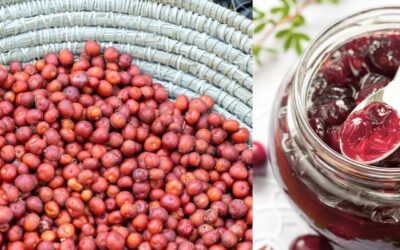
Due to the lake fire last year, in all of those places I’ve described, most of the California Juniper has been burned. But there’s one California Juniper that’s quite robust, that’s fairly near the Figueroa Mountain Ranger Station. And then the Canyon Live Oak is also from the east flank of Ranger Peak. And the redberry, the Rambus Crocea, is from Figueroa Southside as well.
So that’s where all of these plants are from, and that’s partly because of just geographic convenience for me, from where I live down in Ballard.
NTNC
Do you have any advice for someone who wants to learn to identify plants?
Greg
Just get out in nature and explore and then as you start relaxing and coming into focus, start following your instincts on what plants are of interest to you. Then, talk to other people and then start doing some of your book research and compare other people’s explorations.
NTNC
Do you have any safety tips for folks out there identifying plants?
Greg
Be careful walking through yucca groves. I often wonder if I’m walking through a serpentine-laden slope that’s covered with yucca, how catastrophic it could be if I fell over onto that sphere of spines. So watch your footing.
NTNC
Where did you learn how to identify plants?
Greg
From being in nature and various books and various teachers. And I’ve had some wonderful plant teachers, which is probably one of my favorite ways to learn, because unexpected things always come up in terms of their knowledge of specific plants in the plant ecosystem.
NTNC
How did you get involved with the Nature Center?
Greg
I think a board member from long ago encouraged me to explore the nature center, I came here, and I really loved it and its philosophy. It’s very children-centric and it’s in a nice intimate setting. I love the old ranch house.
So it’s been really a wonderful thing to be part of it and the education surrounding it. And I love all of the school activity that occurs here.

Check out the live plant display at the nature center for a limited time only! This year, we’ve updated the exhibit to be interactive with the book A Flora of the Santa Barbara Region, California. Come learn how to identify native plants using a field guide, and test your investigative skills to find the common names and traits of each plant!